The Uncommon Sufferings of Thomas Brown



¶As I am but a Youth, I shall not make those Remarks on the Difficulties I have met with, or the kind Appearances of a good GOD for my Preservation, as one of riper Years might do; but shall leave that to the Reader as he goes along, and shall only beg his Prayers, that Mercies and Afflictions may be sanctified to me, and relate Matters of Fact as they occur to my Mind.
May 1756
Brown enlists in Captain Thomas Speakman’s company of Rogers’ Rangers
Meanwhile, in the wider war
- 18 May 1756: Great Britain declares war on France
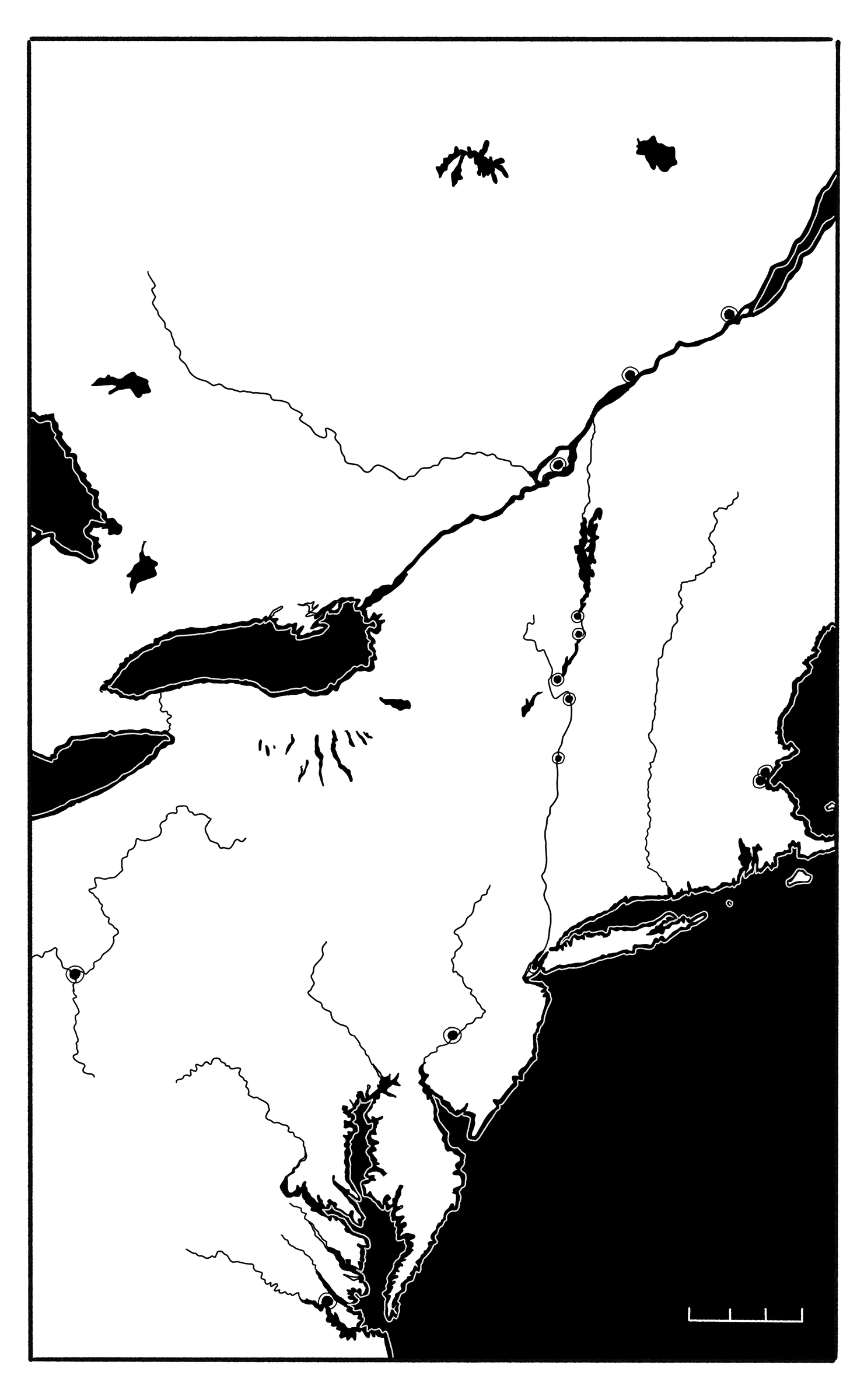
¶I was born in Charlestown, near Boston in New-England, in the Year 1740, and put an Apprentice by my Father to Mr. Mark White of Acton,1 Mark White Jr. (1716–1798) was a cooper and inn owner. He was a prominent citizen of Acton and later served with the Minutemen and in the Massachusetts State Assembly during the Revolution. His father, Mark White Sr. (c.1689–1758), was an emigrant from England. It is likely that Brown is referring to the junior White. and in the Year 1756, in the Month of May, I inlisted into Major Rogers’s Corps of Rangers, in the Company commanded by Capt. Spikeman.2 Captain Thomas Speakman. Misspelled throughout as “Spikeman.” Speakman was born in 1722 to a wealthy Boston family and briefly attended Harvard in the late 1730s before dropping out for unknown reasons. He married Mary Warner around 1740 and fathered two sons and three daughters. He had previously served in the Fort Beauséjour campaign of 1755.
¶We march’d for Albany, where we arriv’d the first of August, and from thence to Fort-Edward. I was out on several Scouts, in one of which I kill’d an Indian.
¶On the 18th of Jan. 1757, we march’d on a Scout from Fort William-Henry; Major Rogers himself headed us: All were Voluntiers that went on this Scout. We came to the Road leading from Ticonderoga3 Misspelled as “Tionderoga” in the first edition of the original document. Corrected throughout. Most original spellings have been retained. to Crown-Point, and on Lake Champlain (which was froze over) we saw about 50 Sleys;4 Sleighs. the Major thought proper to attack them and ordered us all, about 60 in Number, to lay in Ambush, and when they were near enough we were order’d to pursue them. I happened to be near the Major when he took the first Prisoner, a Frenchman: I singled out one and follow’d him; they fled some one Way and some another, but I soon came up with him and took him. We took seven in all, the rest Escaping, some to Crown-Point, and some return’d to Ticonderoga: When we had brought the Prisoners to Land the Major examined them, and they inform’d him that there were 35 Indians and 500 Regulars at Ticonderoga.
¶It being a rainy Day we made a Fire and dry’d our Guns.
¶The Major tho’t best to return to Fort William-Henry in the same Path we came,5 In the “Rules for Ranging” later authored by Rogers, he says a return route should never be taken along the same path from which you came. One can easily assume his experience here led him to that conclusion. the Snow being very deep; we march’d in an Indian-File and kept the Prisoners in the Rear, lest we should be attack’d: We proceeded in this Order about a Mile and a half, and as we were ascending a Hill, and the Centre of our Men were at the Top, the French, to the Number of 400, besides 30 or 40 Indians, fir’d on us before we discovered them: The Major ordered us to advance. I receiv’d a Wound from the Enemy (the first Shot they made on us) thro’ the Body, upon which I retir’d into the Rear, to the Prisoner I had taken on the Lake, knock’d him on the Head and killed him, lest he should escape and give bad Information to the Enemy; and as I was going to place myself behind a large Rock, there started up an Indian from the other Side; I threw myself backwards into the Snow, and it being very deep, sunk so low that I broke my Snow-shoes (I had time to pull ’em off, but was obliged to let my Shoes go with them) one Indian threw his Tomahawk at me, and another was just upon seizing me; but I happily escaped and got to the Centre of our Men, and fix’d myself behind a large Pine, where I loaded and fir’d every Opportunity; after I had discharged 6 or 7 Times, there came a Ball and cut off my Gun just at the Lock. About half an Hour after, I receiv’d a Shot in my Knee; I crawled again into the Rear, and as I was turning about receiv’d a Shot in my Shoulder. The Engagement held, as near as I could guess, 5 1/2 Hours, and as I learnt after I was taken, we Killed more of the Enemy than we were in Number. By this Time it grew dark and the Firing Ceased on both Sides, and as we were so few the Major took the Advantage of the Night and escaped with the well Men, without informing the wounded of his Design, lest they should inform the Enemy and they should pursue him before he had got out of their Reach.6 The First Battle on Snowshoes is also known as The Battle of La Barbue Creek. Estimates range in the exact number of combatants and casualties. It is generally believed the Rangers consisted of 74 men and suffered 14 killed, and the French and Indians 179 men with 14–18 killed.
¶Capt. Spikeman, one Baker7 Robert Baker was not a ranger, but a volunteer from the 44th Regiment. and myself, all very badly wounded, made a small Fire and sat about half an Hour, when looking round we could not see any of our Men; Captain Spikeman called to Major Rogers, but received no Answer, except from the Enemy at some Distance; upon this we concluded our People were fled. All hope of Escape now vanish’d; we were so wounded that we could not travel; I could but just walk, the others could scarce move; we therefore concluded to surrender ourselves to the French: Just as we came to this Conclusion, I saw an Indian coming towards us over a small Rivulet8 A rivulet is a small stream. that parted us in the Engagement: I crawl’d so far from the Fire that I could not be seen, though I could see what was acted at the Fire; the Indian came to Capt. Spikeman, who was not able to resist, and stripp’d and scalp’d him alive; Baker, who was lying by the Captain, pull’d out his Knife to stab himself, which the Indian prevented and carried him away: Seeing this dreadful Tragedy, I concluded, if possible, to crawl into the Woods and there die of my Wounds: But not being far from Capt. Spikeman, he saw me and beg’d me for God’s sake! to give him a Tomahawk, that he might put an End to his Life! I refus’d him, and exhorted him as well as I could to pray for Mercy, as he could not live many Minutes in that deplorable Condition, being on the frozen Ground, cover’d with Snow. He desired me to let his Wife know (if I lived to get home) the dreadful Death he died. As I was travelling as well as I could, or rather creeping along, I found one of our People dead; I pull’d off his Stockings (he had no Shoes) and put them on my own Legs.

¶By this Time the Body of the Enemy had made a Fire, and had a large Number of Centries out on our Path, so that I was obliged to creep quite round them before I could get into the Path; but just before I came to it I saw a Frenchman behind a Tree, within two Rods of me,9 Two rods is about 33 feet. but the Fire shining right on him prevented his seeing me. They cried out about every Quarter of an Hour, in French, ALL IS WELL! And while he that was so near me was speaking, I took the Opportunity to creep away, that he might not hear me, and by this Means got clear of him and got into our Path. But the Snow and Cold put my Feet into such Pain, as I had no Shoes, that I could not go on; I therefore sat down by a Brook, and wrapt my Feet in my Blanket. But my Body being cold by sitting still, I got up, and crawl’d along in this miserable Condition the Remainder of the Night.
¶The next Day, about 11 o’Clock, I heard the Shouts of Indians behind me, and I suppos’d they saw me; within a few Minutes four came down a Mountain, running towards me: I threw off my Blanket, and Fear and Dread quickned my Pace for a while; but, by Reason of the Loss of so much Blood from my Wounds, I soon fail’d. When they were within a few Rods of me they cock’d their Guns, and told me to stop; but I refus’d, hoping they would fire and kill me on the Spot; which I chose, rather than the dreadful Death Capt. Spikeman died of. They soon came up with me, took me by the Neck and Kiss’d me. On searching my Pockets they found some Money, which they were so fond of, that in trying who could get most, they had like to have kill’d me. They took some dry Leaves and put them into my Wounds, and then turn’d about and ordered me to follow them.
¶When we came near the main Body of the Enemy, the Indians made a Live-Shout, as they call it when they bring in a Prisoner alive (different from the Shout they make when they bring in Scalps, which they call a Dead-Shout). The Indians ran to meet us, and one of them struck me with a Cutlass a-cross the Side; he cut thro’ my Cloaths, but did not touch my Flesh; others ran against me with their Heads: I asked if there was no Interpreter, upon which a Frenchman cry’d, I am one:10 The identity of the interpreter is unknown. The French and Indian force was commanded by Ensign Charles-Michel Mouet de Langlade (1729–c.1800), an experienced half-French, half-Ottawa warrior who previously participated in Braddock’s Defeat, and would later see action at the Siege of Fort William Henry and the Battle of the Plains of Abraham, as well as Captain de Basserode and Lieutenant d’Astrel of the Regiment de Languedoc. I ask’d him, if this was the Way they treated their Prisoners, to let them be cut and beat to Pieces by the Indians? He desired me to come to him; but the Indians would not let me, holding me one by one Arm and another by the other: But there arising a Difference between the four Indians that took me, they fell to fighting, which their commanding Officer seeing, he came and took me away and carry’d me to the Interpreter; who drew his Sword, and pointing it to my Breast, charged me to tell the Truth, or he would run me through: He then ask’d me what Number our Scout consisted of? I told him 50: He ask’d where they were gone? I told him, I supposed as they were so numerous they could best tell. He said I told him wrong; for he knew of more than 100 that were slain: I told him we had lost but 19 in all: He said, there were as many Officers. On which he led me to Lieut. Kennedy.11 Lieutenant Samuel Kennedy. I saw he was much Tomahawk’d by the Indians. He ask’d me if he was an Officer? I told him, he was a Lieutenant: And then he took me to another; who, I told him, was an Ensign:12 Ensign Caleb Page. From thence he carried me to Captain Spikeman, who was laying in the Place I left him; they had cut off his Head, and fix’d it on a Pole.


22 Jan. 1757 – 19 Feb. 1757
Brown recovers from his wounds at Fort Ticonderoga hospital
See it on the timeline →¶I beg’d for a Pair of Shoes, and something to eat; the Interpreter told me, I should have Relief when I came to Ticonderoga, which was but one Mile and a 1/4 off, and then delivered me to the 4 Indians that took me. The Indians gave me a Piece of Bread, and put a Pair of Shoes on my Feet.
¶About this Time Robert Baker, mentioned above, was brought where I was; we were extremely glad to see each other, tho’ we were in such a distress’d Condition: he told me of five Men that were taken.13 Sergeant James Henry, Sergeant William Morris, Private David Kimble, Private Hugh Morrison, and Private Benjamin Woodall. We were ordered to march on toward Ticonderoga: But Baker replied, he could not walk. An Indian then pushed him forwards; but he could not go, and therefore sat down and cried; whereupon an Indian took him by the Hair, and was going to kill him with his Tomahawk: I was moved with Pity for him, and, as weak as I was, I took his Arms over my Shoulders, and was enabled to get him to the Fort.
19 Feb. 1757 – 27 Mar. 1757
Brown lives with the interpreter at Fort Ticonderoga
See it on the timeline →¶We were immediately sent to the Guard House, and, about half an Hour after, brought before the Commanding-Officer,14 Paul-Louis Dazemard de Lusignan (1691–1764). who, by his Interpreter,15 The identity of this interpreter, like the one on the battlefield, remains a mystery. examined us separately; after which he again sent us to the Guard-House. The Interpreter came and told us, that we were to be hang’d the next Day, because we had kill’d the 7 Prisoners we had taken on the Lake; but was afterwards so kind as to tell us, this was done only to terrify us. About an Hour after came a Doctor, and his Mate, and dressed our Wounds; and the Commanding-Officer sent us a Quart of Claret. We lay all Night on the Boards, without Blankets. The next Day I was put into the Hospital, (the other Prisoners were carried another Way) here I tarried ’till the 19th of Feb. and the Indians insisted on having me, to carry to their Homes, and broke into the Hospital; but the Centinel call’d the Guard and turn’d them out: after which, the commanding Officer prevailed with them to let me stay ’till the 1st of March, by which Time I was able to walk about the Fort.
¶As I was one Day in the Interpreter’s Lodging, there came in 10 or 12 Indians, with the Scalps they had taken, in order to have a War-Dance: They set me on the Floor, and put 7 of the Scalps on my Head while they danc’d; when it was over, they lifted me up in triumph: But as I went and stood by the Door, two Indians began to dance a Live-Dance, and one of them threw a Tomahawk at me, to kill me, but I watch’d his Motion and dodg’d the Weapon.
¶I lived with the Interpreter ’till the first of March, when General Rigeau16 François-Pierre Rigaud de Vaudreuil (1703–1779) was the younger brother of Pierre de Rigaud de Vaudreuil de Cavagnial, marquis de Vaudreuil, the Governor General of New France. came to the Fort with about 9000 Men,17 1,500 men in reality. The reason for the inaccuracy is unknown. in order, as they said, to make an Attempt on Fort William-Henry: Their Design was to scale the Walls, for which Purpose I saw them making Scaling-Ladders. The Day before they marched the General sent for me, and said, Young Man you are a likely Fellow; it’s Pity you should live with such an ignorant People as the English, you had better live with me. I told him I was willing to live with him: He answer’d, I should, and go with him where he went: I replied, Perhaps he would have me go to War with him: He said, That was the Thing; he wanted me to direct him to Fort William-Henry, and show him where he might scale the Walls. I told him, I was sorry that a Gentleman should desire such a Thing of a Youth, or endeavor to draw him away from his Duty. He added, He would give me 7000 Livres18 Very roughly equivalent to $20,000 in 2024. on his Return. I replied, that I was not to be bought with Money, to be a Traitor to my Country and assist in destroying my Friends: He smiled, and said, In War you must not mind even Father or Mother. When he found that he could not prevail with me, by all the fair Promises he made, he ordered me back to the Fort; and had two other Prisoners brought before him, to whom he made the same Proposals as he had made to me; to which they consented.19 Privates David Kimble and Benjamin Woodall. The next Day I went into the Room where they were, and asked them if they had been with the General; they said, they had, and that they were to have 7000 Livres a-piece, as a Reward: I asked them, if that was the Value of their Fathers and Mothers, and of their Country? They said they were obliged to go. I said, the General could not force them; and added, that if they went on such a Design, they must never return among their Friends; for if they did, and Baker and I should live to get Home, we would endeavour they should be hang’d. At this Time a Smith came and put Irons on my Feet: But the General gave those two Men who promis’d to go with him, a Blanket, a Pair of Stockings and Shoes. They were taken out of the Guard-House, and marched with the French as Pilots. The General did not succeed; he only burnt our Battoes,20 A “batteau” is a flat-bottomed boat used for troop transportation. &c. and returned to Ticonderoga. The poor Fellows never had their Reward, but, instead of that, were sent to the Guard-House and put in Irons.
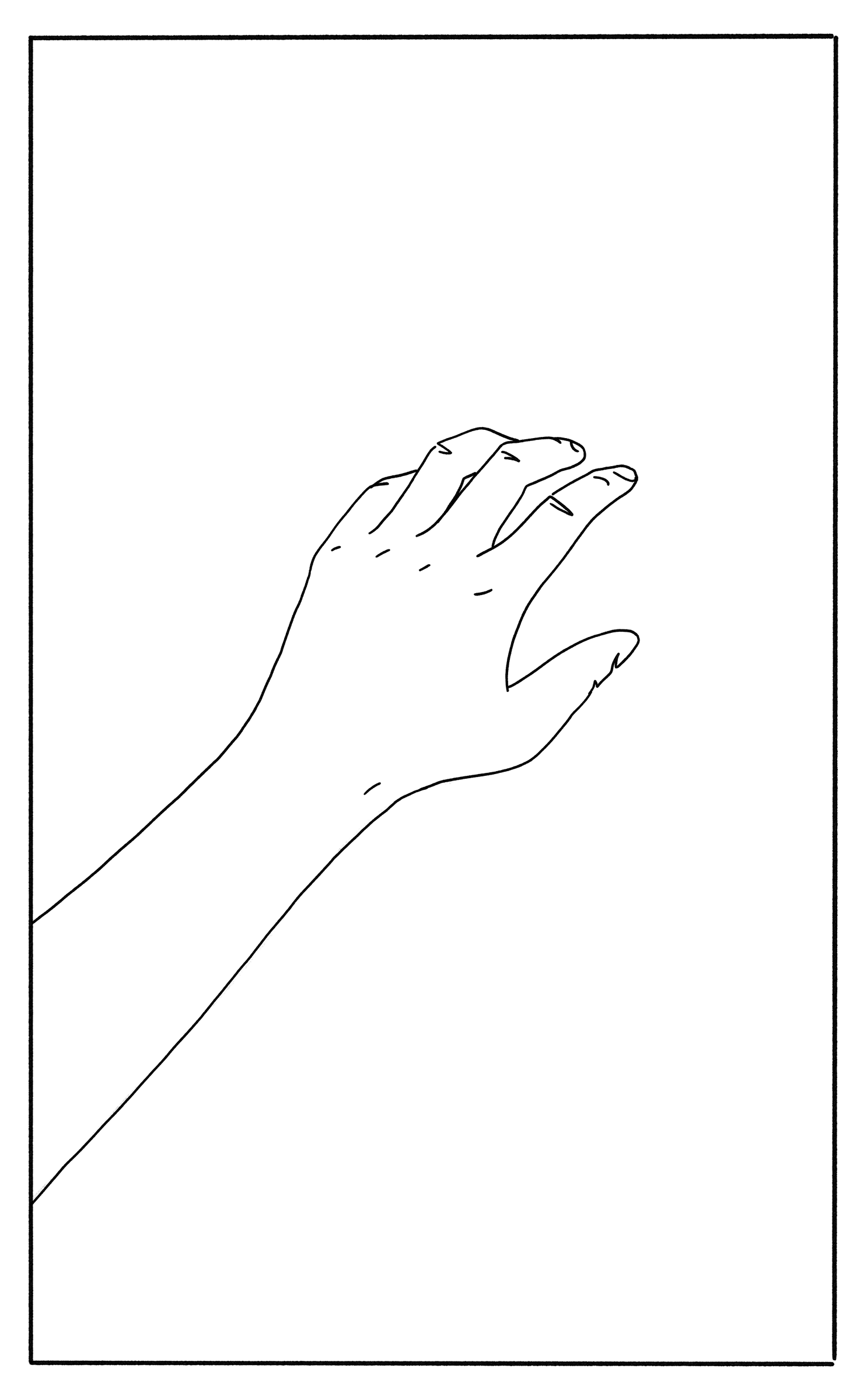
¶Soon after this I was taken out of Irons, and went to live with the Interpreter till the 27th of March; at which Time the Indians took me with them, in order to go to Montreal, and set me to draw a large Sled, with Provisions, my Arms being tied with a Rope. By the Time we got to Crown-Point, I was so lame that I could not walk. The Indians went ashore and built a Fire, and then told me I must dance; to which I complied, rather than be kill’d. When we sat off again, I knew not how to get rid of my Sled, and I knew I was not able to draw it: but this Fancy came into my Head; I took three Squaws on my Sled, and pleasantly told them, I wish’d I was able to draw ’em: All this took with the Indians; they freed me of the Sled, and gave it to other Prisoners: They stripp’d off all my Cloaths, and gave me a Blanket. And the next Morning, they cut off my Hair and painted me, and, with Needles and Indian-ink, prick’d on the back of my Hand the Form of one of the Scaling-Ladders, which the French made to carry to Fort William-Henry. I understood they were vex’d at the French, for the Disappointment.21 Although Brown didn’t know it, the tattoo likely signified the tribe’s decision to keep him alive, claim him as property, and adopt him—in their view, just compensation for the French failure to follow up on promises made regarding plunder and prisoners from the planned sack of Fort William Henry.
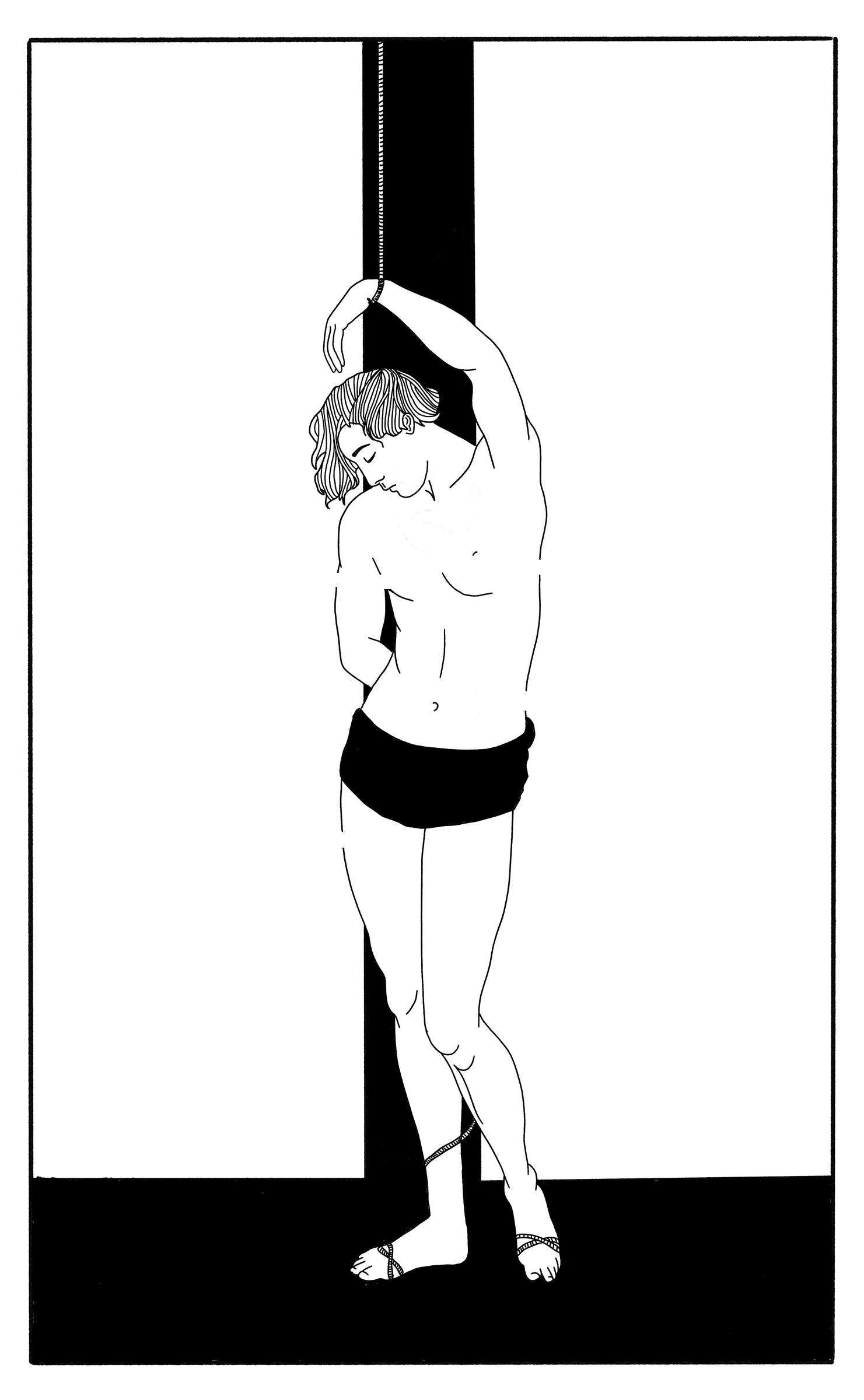
¶We travelled about nine Miles on Lake Champlain, and when the Sun was two Hours high we stop’d; they made a Fire, and took one of the Prisoners that had not been wounded, and were going to cut off his Hair, as they had done mine: He foolishly resisted them, upon which they prepar’d to burn him; but the Commanding-Officer prevented it at this Time. But the next Night, they made a Fire, stripp’d and ty’d him to a Stake, and the Squaws cut Pieces of Pine, like Scures,22 Skewers. and thrust them into his Flesh, and set them on Fire, and then fell to powwawing and dancing round him; and ordered me to do the same: Love of Life obliged me to comply; for I could expect no better Treatment if I refus’d. With a bitter and heavy Heart I feigned myself merry. They cut the poor Man’s Cords, and made him run backwards and forwards. I heard the poor Man’s Cries to Heaven for Mercy; and at length, thro’ extreme Anguish and Pain, he pitched himself into the Flames and expired.




¶From thence we travelled, without any Thing worthy of Notice happening, ’till we came to an Indian Town, about 20 Miles from Montreal. When we were about a Gun’s-shot from the Town, the Indians made as many live Shouts as they had Prisoners, and as many dead Ones as they had Scalps. The Men and Women came out to meet us, and stripp’d me naked; after which they pointed to a Wigwam and told me to run to it, pursuing me all the Way with Sticks and Stones.23 This is the “running of the gauntlet,” which initiated captives into tribal society and allowed the tribe to share the glory of victory.





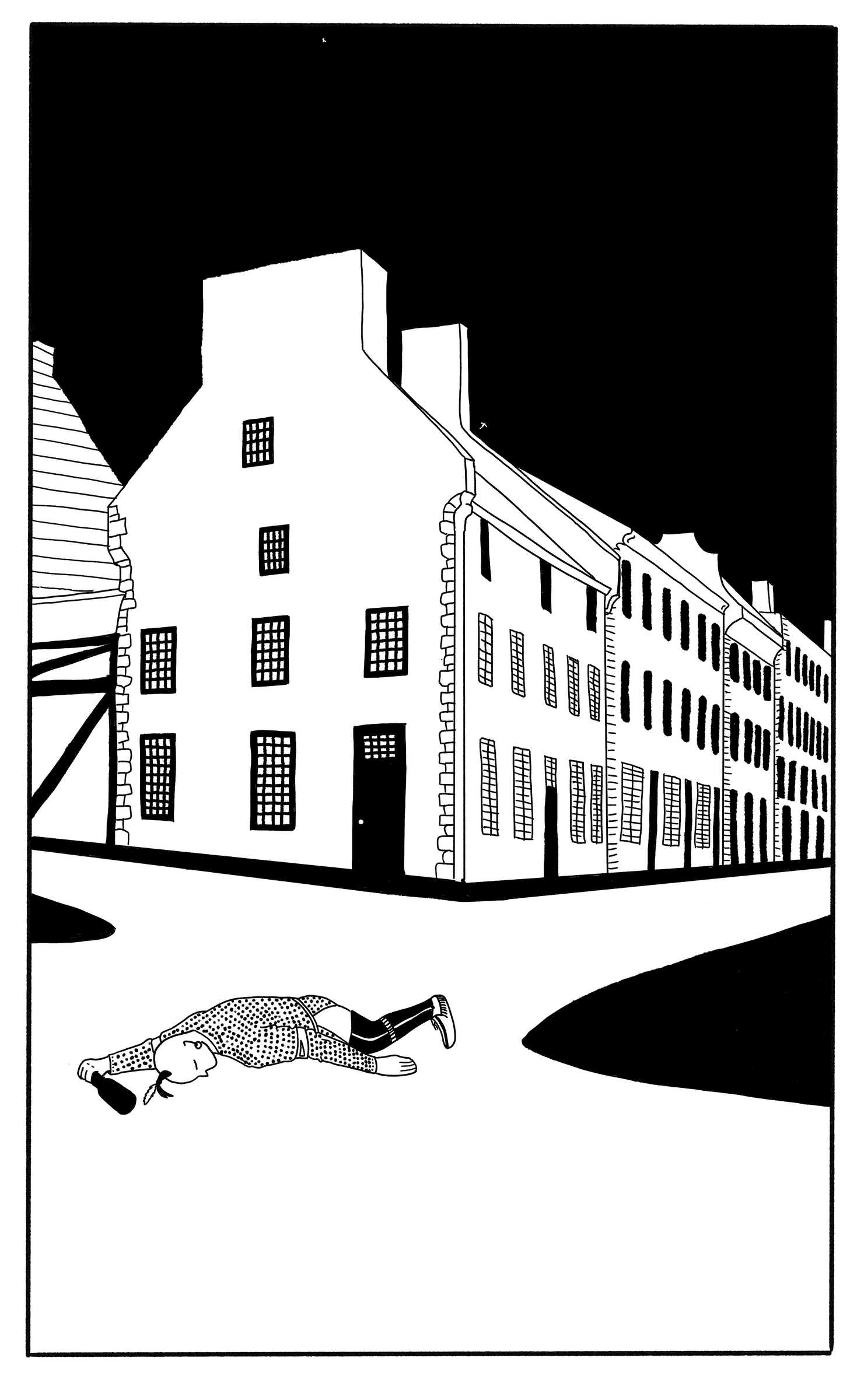
¶Next Day we went to Montreal, where I was carried before Governor Vaudreuill and examined:24 Governor General of New France Pierre de Rigaud de Vaudreuil de Cavagnial, marquis de Vaudreuil (1698–1778). Afterwards I was taken into a French Merchant’s House, and there I lived three Days. The third Night two of the Indians that took me came in drunk, and asked for me; upon which the Lady called me into the Room, and as I went and stood by the Door, one of them begun to dance the War-Dance about me, designing to kill me; but as he lifted up his Hand to stab me, I catch’d hold of it with one of mine, and with the other knock’d him down, and then ran up Garret25 A garret is a small attic space. and hid. The Lady sent for some Neighbours to clear the House of her Guests, which they did: It was a very cold Night, and one of the Indians being excessive drunk, fell down near the House, and was found in the Morning froze to death. The Indians came to the House, and finding their Brother dead, said I had kill’d him; and gathering a Number together, with their Guns, beset the House and demanded me of the Lady, saying, I should die the most cruel Death: The Lady told me of it, and advis’d me to hide myself in the Cellar, under the Pipes of Wine; which I did: They searched the House, and even came down Cellar, but could not find me. The Lady desired a Frenchman to tell the Indians, That he saw me without the City, running away; they soon took after me, every Way. The Merchant pitying my condition, cover’d me with a Blanket, and carried me in his Conveyance about five Miles, to a Village where his Wife’s Father lived, in order to keep me out of the Way of the Indians. When the Indians that pursued me had returned, and could not find me, they concluded that I was concealed by the Merchant; and applied to the Governor that I might be delivered to them, in order that they might kill me for killing their Brother; adding, by way of threatning, that if I was not delivered up to them, they would turn and be against the French. The Governor told them, he had examined into the Matter, and found that I did not kill the Indian, nor know any Thing about it; but that he froze to Death. On this they said they would not kill me, but would have me to live with them: The Governor then informed them where I was, and they came and took me with them to Montreal again, and dressed me in their Habit.
1 May 1757
Brown departs with his Indian captors for the Pays d’en Haut (Upper Country)
Meanwhile, in the wider war
- 3–9 Aug. 1757: The Siege of Fort William Henry
¶On the 1st of May we set off to go to the Missisippi, where my Indian Master belonged,26 Brown’s captors were most likely Ottawas, hailing from the Pays d’en Haut—“The Upper Country.” However, some Potawatomies were also present at Fort Ticonderoga and participated in the battle that day. and two other English Prisoners with them. For several Days the Indians treated me very ill; but it wore off. We went in Bark Canoes, ’till we came to Lake Sacrament,27 Lake George. the first Carrying-Place.28 A carrying-place is a portage, where watercraft must be transported overland between waterways. We continued our Journey till we came to the Ohio, where General Braddock was defeated.29 About 10 miles from the site of Fort Duquesne and modern-day Pittsburgh. Here they took one of the Prisoners, and with a Knife ript open his Belly, took one End of his Guts and tied to a Tree, and then whipt the miserable Man round and round ’till he expired; obliging me to dance, while they made their Game at the dying Man.
¶From hence we set off to go to an Indian Town about 200 Miles from the Ohio, where we arrived in 15 Days, and tarried three. The third Night one of the Indians had a mind to kill me; as I was standing by the Fire, he ran against me to push me into the Flames, but I jumped over, and Escaped being burnt: he followed me round and round, and struck me several Times with his Head and Fist; which so provok’d me, that as he was coming at me again, I struck him and knock’d him backwards. The other Indian laugh’d, and said I was a good Fellow.30 Indians often respected those who showed courage, and even a bit of resistance, when physically challenged. Famously, John Stark, another of Rogers’ Rangers, grabbed hold of a stick and beat his own captors when he was made to run the gauntlet during his brief captivity with the Abenakis in 1752. Rather than punish him for fighting back, they saw it as a testament to his manhood.
¶The next Day we set off for the Missisippi, where we arrived the 23d of August, having passed over thirty-two Carrying-Places from our leaving Montreal. When we came here, I was ordered to live with a Squaw, who was to be my Mother. I liv’d with her during the Winter, and was employed in Hunting, dressing Leather, &c. being cloath’d after the Indian Fashion.


¶In the Spring a French Merchant came a Trading in Bark Canoes, and on his Return wanted Hands to help him; he prevailed with my Mistress to let me go with him to Montreal. When we came there, and the Canoes were unloaded, I went into the Country and liv’d with his Wife’s Father, and worked at the Farming-Business for my Victuals and Cloathing; I fared no better than a Slave. The Family often endeavoured to persuade me to be of their Religion, making many fair Promises if I would: Wanting to see what Alteration this would make in their Conduct towards me, one Sunday Morning I came to my Mistress, and said; Mother, will you give me good Cloaths, if I will go to Mass? She answered, Yes, Son, as good as any in the House. She did so, and I rode to Church with two of her Daughters; in giving me Directions how to behave, they told me, I must do as they did. When we came Home, I sat at the Table and ate with the Family, and Every Night and Morning was taught my Prayers.
Spring 1758*
Brown lives and works with the merchant’s wife’s family outside Montreal
Meanwhile, in the wider war
- 8 Jul. 1758: The Battle of Fort Ticonderoga
¶Thus I lived ’till the next Spring,31 At this point the timeline Brown has constructed breaks down. If it is taken literally, it would be 1759—but we know based on what follows in the narrative that it must still be 1758. Thus, logically, we can only conclude that Brown meant “for the rest of the Spring,” and that this is an error of memory, or it is the result of inaccurate dictation to Fowle and Draper. when my Master’s Son-in-Law, that bro’t me from the Missisippi, came for me to return with him, as he was going again there to trade. I refus’d to go, and applied to the Governor. I was then put into Goal,32 Jail. where I tarried 5 Weeks, living on Bread and Water and Horse-Beef. When some Prisoners were going to be sent to Quebeck, in order to be transported to Old-France, I went with them: Here we laid in Goal 6 Weeks. But happening to see one of my Master’s Sons, he prevailed with me to go back with him and work as formerly; I consented, and tarried with him ’till the 8th of September.
9 Sep. 1758 – about 2 Oct. 1758
Brown attempts escape with another English prisoner
See it on the timeline →¶There was at the next House an English Lad, a Prisoner; we agreed to run away together, through the Woods, that so, if possible, we might get home to our Friends: But how to get Provisions for the Way, we Knew not; ’till I was allowed a Gun to kill Pigeons, which were very plenty here. I shot a number, split and dried them, and concealed in the Woods. We agreed to set off on a Sunday Morning, and were to meet at an appointed Place; which we did, and began our Journey towards Crown-Point.33 From Montreal to Crown Point is about 120 miles. After we had travelled 22 Days, 15 of which we had no provision except Roots, Worms, and such like, we were so weak and faint that we could scarce walk: My Companion gave out, and could go no further; he desired me to leave him, but I would not. I went and found three Frogs, and divided them between us. The next morning he died. I sat down by him, and, at first, concluded to make a Fire, as I had my Gun, and eat his Flesh, and if no Relief came, to die with him; but, finally came to this Resolution; To cut off of his Bones as much Flesh as I could, and tie it up in a Handkerchief, and so proceed as well as I could: Accordingly did so, and buried my Companion on the Day I left him. I got three Frogs more the next Day. Being weak and tired, about 9 o’Clock I sat down; but could not eat my Friend’s Flesh. I expected soon to die myself; and while I was commending my Soul to GOD, I saw a Partridge light just by me, which I thought was sent by Providence; I was so weak, that I could not hold out my Gun; but by resting, I brought my Peice to bear so that I kill’d the Partridge. While I was eating of it, there came two Pigeons, so near, that I kill’d ’em both. As I fired two Guns, I heard a Gun at a Distance: I fired again, and was answered twice. This roused me; I got up and travelled as fast as I could towards the Report of the Guns; and about half a Mile off, I saw three Canadians. I went to ’em, and pretended to be a Dutchman, one of their own Regulars, that was lost in the Woods. They brought me to Crown-Point; upon which I desired to see the Commanding-Officer:34 This might be Paul-Louis Dazemard de Lusignan, who Brown previously encountered at Fort Ticonderoga when he was first taken prisoner in January 1757. Lusignan was officially the commander of Crown Point (Fort Saint-Frédéric) from 1751 to 1758. He knew me again, and asked me, how I came there? I told him my Story, and what difficulties I had met with. He ordered me to the Guard-House, and to be put in Irons: About an hour after he sent me a Bowl of Rice.
Mid-Oct. 1758 – 19 Nov. 1758
Brown is recaptured and returned to his host family
See it on the timeline →¶After I had been at Crown-Point ten or twelve Days, the Commanding-Officer sent me back, under a Guard of 12 soldiers, to Montreal, in a Battoe, and wrote a Letter (as I afterwards understood) to my Master not to hurt me.
19 Nov. 1758
Brown departs Montreal with Colonel Peter Schuyler
Meanwhile, in the wider war
- 24 Nov. 1758: The French abandon Fort Duquesne
¶When I came to the House, one of his Daughters met me at the Door, and pushed me back, and went and called her Father. At this House there was a French Captain, of the Regulars, billeted; he was a Protestant: He hearing my Voice, called me to him and asked me where I had been? Upon my telling him, he called me a Fool, for attempting a thing so impossible. My Master coming in, took me by the Shoulder, and threatned to kill me for stealing his Gun when I run away: But the good Captain prevented him from using any Violence. The Captain asked me if I had been before the Governor; I told him, I had not; and he then advis’d my Master to send his Son with me (who was an Ensign among the Canadians.) When we came to a small Ferry, which we were to pass, I refus’d to go any further; and after a great deal of do, he went without me. On his Return, he said he had got leave of the Governor, that I should go back to his Father and work as formerly. Accordingly I lived with him ’till the 19th of November; and when Col. Schuyler was coming away, I came with him to Albany.35 Colonel Peter Schuyler (1707–1762) was a member of the famous Schuyler family of New York and New Jersey. At the start of the French and Indian War he was given command over New Jersey’s forces. He was captured at the fall of Fort Oswego in 1756, paroled in October 1757, recalled from parole in July 1758, then released for good in November 1758. Schuyler reportedly paid the ransom and secured the release of over 100 English prisoners, apparently including Thomas Brown.
¶Here I was taken Sick, and some of the Light-Infantry promised me, if I would inlist, that they would provide for me; and having neither Friends or Money, I was obliged to consent.36 Colonel Thomas Gage’s 80th Light Infantry. They ordered me a Bed, and Care to be taken of me: Five Days after, they put me on board a Sloop, and sent me to Kingston, and put me into a Hospital; where I was three Months.
Summer 1759
Brown’s regiment departs for Albany, thence to Forts William Henry, Ticonderoga, and Crown Point
Meanwhile, in the wider war
- 26 Jun. 1759: Major-General James Wolfe’s army arrives outside Quebec
- 26 Jul. 1759: The French abandon Fort Ticonderoga
- 31 Jul. 1759: The French abandon Crown Point
¶The Regiment remained here ’till May, when we went to Albany, from thence to Fort William-Henry, and then to Ticonderoga and Crown-Point; both of which Places surrendered to General AMHERST.
Sep. 1759
Brown is taken prisoner again and transported to Montreal
Meanwhile, in the wider war
- 13 Sep. 1759: The Battle of the Plains of Abraham
- 4 Oct. 1759: Rogers’ Rangers raid the Indian village of St. Francis
¶On Sept. 19th, I went Pilot of a Scout to Cachanowaga,37 Caughnawaga, just south of Montreal. with Lieutenant McCurdy, and on our Return, as we were on Lake Champlain, turning a Point of Land, and under great Way, we discovered in a large Cove a French Brig,38 The 10-gun Schooner La Vigilante. but it was unhappily too late for us to make our Escape: We were pursued and taken Prisoners, (being 7 in Number) and the next Morning sent to Nut-Island;39 Île aux Noix, site of a French fort on the Richelieu River above Lake Champlain. where we were stripp’d by the Indians, and dressed after their manner. From thence we were conducted to Montreal, and examined before the Governor; after which we were ordered to Prison. I applied to the Governor, and told him, That I had been a Prisoner there two Years, and had liv’d with such a Farmer, and desired Liberty to go to him again: Upon which he sent for my Master’s Son, and being inform’d of the Truth of what I related, consented.
¶I tarried with the Farmer ’till Novemb. 25th, when by a Flag of Truce 250 English Prisoners came to Crown-Point; where I rejoined my Regiment.
Jan. 1760
Thomas Brown returns to Charlestown
Meanwhile, in the wider war
- 8 Sep. 1760: The French surrender Montreal
- 10 Feb. 1763: The Treaty of Paris ends the French and Indian War
- 1763–1765: Ottawa chief Pontiac rises in rebellion against the British Empire
- 17 Jun. 1775: Brown’s hometown of Charlestown is burned by the British at the Battle of Bunker Hill
¶After repeated Application to General AMHERST, I was dismissed, and returned in Peace to my Father’s House the Beginning of January, 1760, after having been absent 3 Years and almost 8 Months.
O! that Men would praise the LORDfor his Goodness, and for hiswonderful Works to theChildren of Men!40Psalm 107 (King James Version).
Bless the LORD, O my Soul!41Psalms 103 and 104 (King James Version).
FINIS